DEAR MODERATOR

Dear Moderator
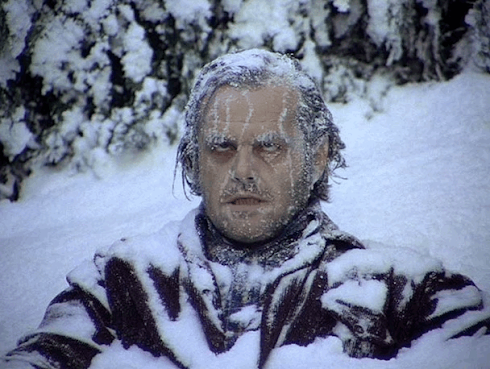
If you look below the picture of the frosty Jack Nickleson you will find a post which includes a live list of the candidates requested in the sample. You should be able to click on those and be taken directly to each student's blog.
Each blog has a link back to AS Thriller Homepage which you can use to navigate back here.
thanks
Mary

DEADLINES!!!!!!

THRILLER FILM AND BLOG DEADLINE: Friday 25th March 3pm
ROUGH CUT DEADLINE: In your lesson w/c 14th March

Phil's Media Resources Blog

Have a look at the important links just to your right - I've added a new link to Phil's Media Resources Blog - it's got some great resources for making thrillers. When you've had a look at it blog about what's inspired you in your own blog!

STOP!

PLEASE CLICK ON YOUR GROUP LINK BEFORE YOU BLOG! If you have posted on the main page below in error, pop in and see me in January.
Enjoy your Holidays!

mary

The Shining

The Shining
You may gain inspiration from the weather and produce a 'homage to Kubrick's The Shining.

Monday, January 24, 2011

THE STRUCTURE OF THRILLER OPENING

A NARRATIVE OPENING- starting introduces setting or charaters but there also will be titles running over it.    
THE SHINING>


A DISCRETE TITLE SEQUENCE- seperately edited seqence that stands apart from film.
SEVEN>


TITLES OVER BLANK SCREEN,FOLLOWING BY THE NARRATIVE OPENING- titles rolling over a blank screen with a sound track then introduces images.
DONNIE DARKO>


STYLIZED EDITED - makes the opening effective . 
TAKING OF PELHAM>

Friday, January 21, 2011

Response to 'Watching' documentary

The concerns of revelations of the content in trailers, In relation to opening sequences in films are labelling trailers as, 'narrative pornography'. As they tend to insert frequent amounts of 'exciting' material to the point, that the audience expect that same level of excitement to be employed in the film itself. This expresses a problem to directors, as the studio companies have presumptions of the measurements of content revealed to the audience, as opposed to the film directors. They claim it's for the essence of 'trailing the audience'.

Hitchcock begins to ellaborate about when the actual beginning of the film is, is it the image that we have of the film that we continue to watch upon in the cinema? Is it when the darkness of cinema falls? He explains that this element of urgency to not to miss the starting of the film, will result in watching a completely, 'different film'. Also, the beginning of the film 'instructs' the audience in how to watch the film.

Thomas Sutcliffe mentions, 'Films need to be seduce their audience into long term commitment. While there are many types of seduction. the temptation to go for the instant arousal is almost irresistable.' This suggests that 'grabbing the audience' in the opening sequence of a film is essential for engagement to continue to watch the rest of the film or films of that type/genre/director in general. The 'thrill of speed', which depicts the content that satisfies what the audience desires is a technique that films tend to follow to anticipate this sense of engagement. In 'Citizen Kane', we are met with opening shot of a tresspass sign, this provides the sense of 'breaking the rules', to amplifly the pre-meditated effect of excitement, as the audience venture in to a setting that is forbidden. In addition, this rises the question surrounding the genre of the movie, is it a horror, mystery, crime etc.?


Regarding comments by Director, Jean Jacques Beineix, the risks of 'instant arousal', present a problem to directors, concerning the content that is meant to excite the audience, it provides the question about what to do next for the director. In my opinion, the problem that would come about, would be attempting to maintain the same technique of how to present excitement to the audience, without switching to another method, which shall confuse the audience, more importantly, disengage them from the film, as a whole.


In the documentary, it mentions, 'a good beginning must make the audience feel that it doesn't know nearly enough yet, and at the same time make sure that it doesn't know too little'. Gary Ross expresses his opinion, about the opening sequence isn't about establishing, 'character', but essentially about establishing 'tone'. It provides the audience with the judgement, whether to be engaged. This brings about the element of suspense, that entices us to continue to watch the film to find out what occurs, this idea can be carried out in various ways, however, I believe there is a limit to how much you can keep the audience in the dark, over-complicate this suspense, and it shall confuse them and possibly disengage them from the film.

Critic Stanley Kauffmann described the 'Classic opening' as, an establishing shot of a landscape, typically a Skyscraper City, such as 'New York'. There would be shots of the buildings, overviews etc. then it would place a shot on the specific building that opening seq
Introduction to Cameras: skills


The class weir firstly introduced to a presentation on the principals and key elements on how to use a camera, attributes such as learning how to insert the battery, memory card, how to use the tripod, how and when to use auto focus (AF) which is a term that interpret ates the camera focus by itself and also manual focus (MF) which means you, yourself doing the focusing.

In adition, we also learnt carefully and in more depth, how to put the camera into the tripod ans secure it giving the footage a more stabled view. We weir then demonstrated how to bring and use all the camera terminology we have been working on into practise,  for example how to capture a medium shot, close up, extreme close up, long shot,  and other key shots such as pan (side to side camera movement) tilt (up and down camera movement) zoom (in and out camera movement - for example closer and more distant) and white balance ( adjusting the colours until the look natural and consistent) all helping develop and produce excellent footage and also provide a wide understanding of  how to use a camera and the different type of camera movements.

Introduction to Cameras: skills


The class weir firstly introduced to a presentation on the principals and key elements on how to use a camera, attributes such as learning how to insert the battery, memory card, how to use the tripod, how and when to use auto focus (AF) which is a term that interpret ates the camera focus by itself and also manual focus (MF) which means you, yourself doing the focusing.

In adition, we also learnt carefully and in more depth, how to put the camera into the tripod ans secure it giving the footage a more stabled view. We weir then demonstrated how to bring and use all the camera terminology we have been working on into practise,  for example how to capture a medium shot, close up, extreme close up, long shot,  and other key shots such as pan (side to side camera movement) tilt (up and down camera movement) zoom (in and out camera movement - for example closer and more distant) and white balance ( adjusting the colours until the look natural and consistent) all helping develop and produce excellent footage and also provide a wide understanding of  how to use a camera and the different type of camera movements.

Friday, January 14, 2011

Analysis Of Thriller clip


What Lies Beneath:
    The clip I watched is what lies beneath, unlike other clips this clip does not provide a lot of production companies and names of starring actors and actresses. However it does contain some information on the production companies.
    In the opening of this clip the first production company is shown, the production company is 20th Century Fox, this is a widely known production company so it shows that this is a good Film, also it is shown for 20 seconds which is a long time considering that it is a two minute clip so this shows that having the production company is important, After a couple of seconds a second production company is shown this time it is Image Movers which is shown for 14 seconds this may show that it is less important than the 20th century fox production company however it does not mean it is not important.

Wednesday, January 5, 2011

Phsyco

The scene where the lady is stabbed gave me the biggest shock; the fact that the audience was given the extra information about the murderer makes that scene impressive as it still gives the audience the great deal of shock.